Don’t Hate Meditate Retro SVG Design Review
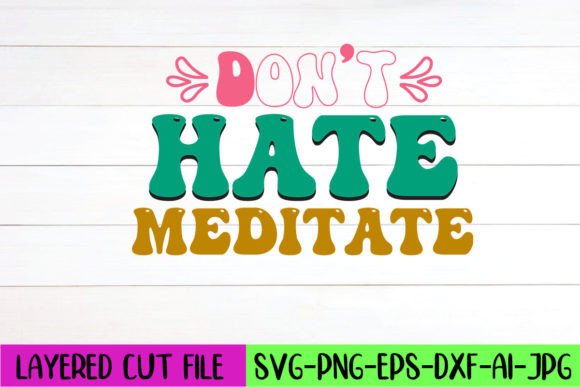
As a designer who spends half the day in digitizing software and the other half troubleshooting stitch errors on an embroidery machine, I have learned to be skeptical of any design that promises too much. When Don’t Hate Meditate Retro SVG Design landed on my desk for review, I didn’t just look at the preview image; I looked at how it would translate from a flat vector into a tangible, stitched object. The market is flooded with generic motivational quotes, but this specific piece carries a distinct visual weight that suggests it could be more than just another impulse buy for an Etsy seller. It sits squarely in the intersection of mental wellness trends and vintage aesthetic revival, a combination that has proven surprisingly resilient in the handmade goods sector.
The First Impression: Mood and Visual Personality
The moment you open the layered files, the personality of the design becomes clear. This isn’t a sterile, modern minimalist quote, nor is it a chaotic, over-stitched mess. The retro vibe is achieved through its typography and layout, which likely utilizes bold, curved, or distressed lettering typical of 70s or early 80s graphic design. For an embroiderer, this distinction is critical. A "retro" font often contains thick strokes and rounded edges, which are generally forgiving on fabric because they can be rendered beautifully with fill stitches without requiring excessive precision in tiny corners.
The phrase itself, "Don’t Hate Meditate," taps into a cultural zeitgeist that balances humor with mindfulness. It’s approachable. It doesn’t preach; it invites. From a branding perspective, this is gold for small business owners. It allows the wearer or user to signal their values—calmness, positivity, and a touch of irony—without being overly serious. In my experience, products that balance humor with sentimentality tend to have higher conversion rates because they feel personal rather than mass-produced.
Real-World Application: From Screen to Stitch
I recently considered using this design for a custom order involving oversized cotton sweatshirts for a boutique client. Sweatshirt embroidery is notoriously tricky due to the thickness and stretch of the fabric. However, the structural integrity suggested by the design’s bold lines makes it a strong candidate for this medium. The negative space in retro typography usually allows the fabric texture to show through, creating a breathable, high-end look that feels intentional rather than like a cheap iron-on transfer.
Beyond apparel, I see this design thriving on accessories. Imagine this embroidered on a structured canvas tote bag. The contrast between the sturdy fabric and the soft, perhaps slightly textured thread work creates a tactile appeal that customers love. Similarly, for baby items, the gentle reminder embedded in the text works well on muslin blankets or burp cloths. It transforms a utilitarian item into a keepsake. The design’s versatility extends to kitchen towels as well; placing a smaller version of the motif near the hem of a tea towel adds a whimsical touch to home decor, appealing to those who want their kitchenware to reflect their personality.
Technical Considerations for Embroidery Designers
While the concept is strong, execution is where many craft businesses stumble. Before committing to a full production run, several technical factors must be evaluated. First, consider the stitch density. If the retro font relies on heavy fill stitches, ensure your machine settings can handle the resulting bulk, especially on thinner fabrics like t-shirts or lightweight aprons. Conversely, if the design uses too much running stitch for details, it may lack the durability required for items that will undergo frequent washing, such as baby clothes or kitchen linens.
Another crucial aspect is the hoop size. Ensure the digital dimensions of the file match your physical hoop capabilities. A design that looks perfect on a screen might require a larger hoop than you anticipated, limiting where you can place it on a garment. For instance, centering a large design on a cap brim requires precise planning to avoid distortion on the curved surface. Always test the design on scrap fabric that matches the final product’s material. This reveals how the thread colors interact with the fabric hue. On dark fabrics, you may need a cut-applique base or extra underlay to prevent the backing from showing through, which can ruin the clean look of the retro aesthetic.
Strategic Use Cases and Market Positioning
This design is particularly well-suited for commercial embroidery projects targeting the gift market. Holiday gifts, wedding favors, and personalized corporate swag are all viable avenues. The message is inclusive enough for general audiences yet specific enough to resonate with niche communities interested in yoga, meditation, or mental health awareness. For an Etsy seller, this means you can create listings that target multiple keywords: "meditation gift," "retro vintage shirt," "mindfulness apparel," and "humorous tote bag."
However, there are areas where caution is advised. Avoid using this design on highly textured fabrics like bouclé or heavy wool unless you are an experienced digitizer who knows how to compensate for fabric irregularities. The fine details of the retro style may get lost in the weave. Additionally, be mindful of layered garments. If you plan to stitch this over a pocket or a seam, ensure the underlying layers do not cause puckering. Curved surfaces, such as baseball caps or beanies, also demand careful tension adjustment. A slight error here can turn a professional-looking patch into a wrinkled mess.
Final Verdict for Craft Business Owners
Don’t Hate Meditate Retro SVG Design offers a compelling blend of aesthetic appeal and marketability. It provides a solid foundation for a variety of handmade products, from custom apparel to home decor. Its strength lies in its emotional resonance and visual clarity, making it easier for customers to connect with the finished product. For digital product sellers, the inclusion of multiple file formats (SVG, PNG, EPS, AI, JPG, DXF) ensures compatibility with various cutting machines and design software, broadening its utility beyond just embroidery.
To maximize success, focus on presentation. Create printable mockups that showcase the design on different backgrounds and materials. Highlight the quality of the stitching in your photos, as this builds trust with buyers who are wary of low-quality prints masquerading as embroidery. By paying attention to the technical details—such as stabilizer choice, thread selection, and fabric compatibility—you can transform this digital asset into a profitable, high-quality physical product. It is a reliable tool for any designer looking to add value to their craft business offerings while providing customers with something meaningful and stylish.